

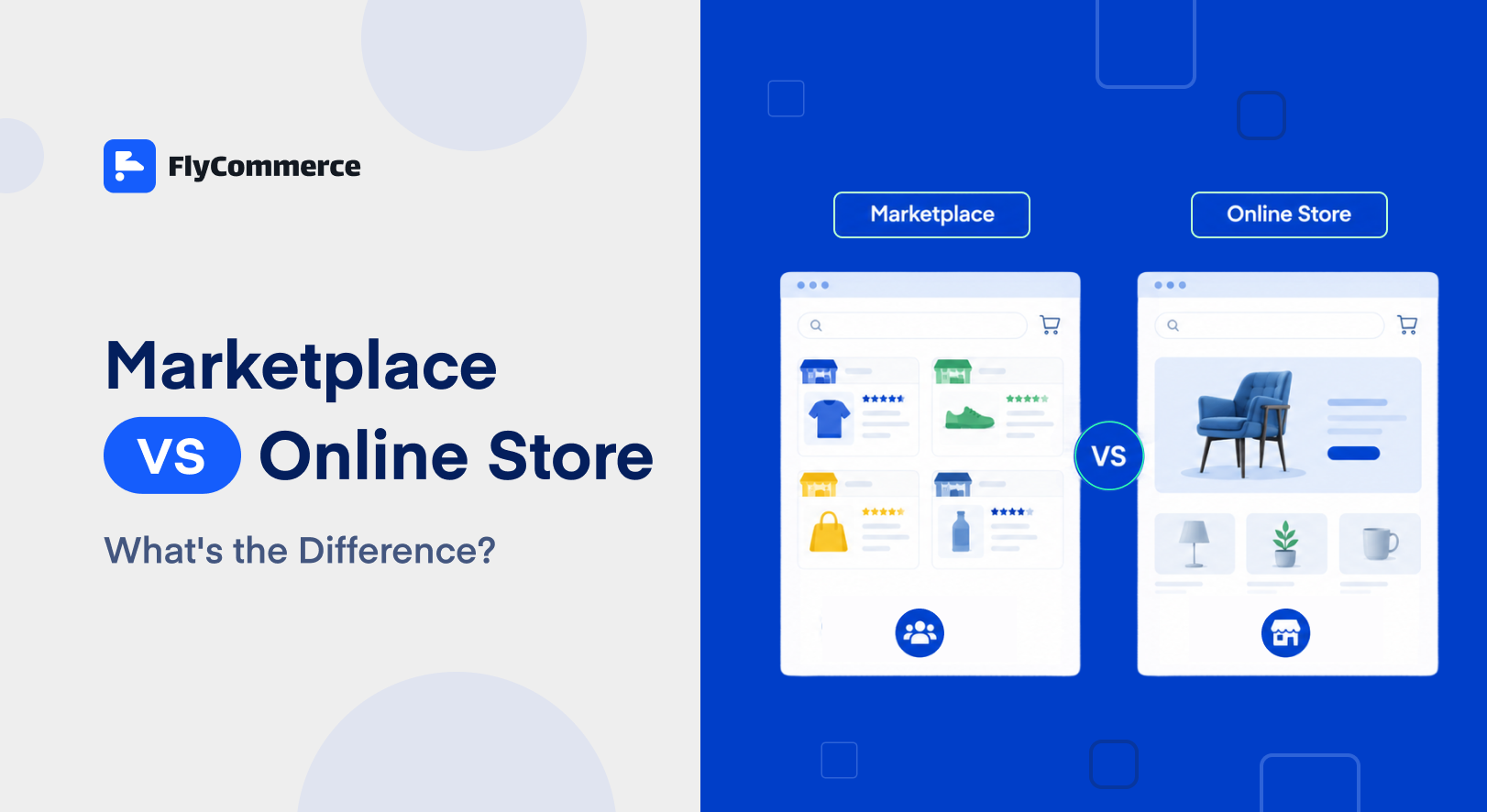
Trying to decide between a marketplace and an online store?
You’re not alone. It’s one of the most common questions from founders starting an ecommerce business, and one of the most important decisions you’ll make before you build anything.
Here’s the short version: an online store is a single-seller platform where you sell your own products directly to customers. A marketplace is a multi-seller platform where multiple vendors sell, and you earn commission on every transaction as the platform owner.
Same question, very different business models.
I’ve worked alongside the team behind Dokan, the WordPress plugin powering 40,000+ active marketplaces worldwide. I’ve seen founders get this choice wrong more times than I can count. This guide covers everything you need to make the right call for your business, including whether you even have to choose at all.
TL;DR:
A marketplace has multiple sellers and the platform owner earns commission. An online store has one seller who earns product margins directly. If you’re deciding where to sell your products, the choice is Amazon vs your own store. If you’re deciding what kind of platform business to build, the choice is completely different, and FlyCommerce is the only platform that lets you run both from one subscription.
Store vs Marketplace at a glance
| Factor | Multi-Vendor Marketplace | Single-Vendor Online Store |
| Who sells | Multiple independent sellers | You only |
| Inventory | Vendors manage their own | You manage it all |
| How you earn | Commission and subscription fees | Product margins |
| Complexity | Higher | Lower |
| Growth ceiling | Unlimited via network effects | Limited by your stock |
Bottom line: You don’t have to choose. FlyCommerce supports both a store and a full multi-vendor marketplace from one platform. Start with a 14-day free trial.
Most People Are Asking the Wrong Version of This Question
Here’s what’s happening when someone searches ‘marketplace vs online store.’
About half of them want to know where to sell. Should I list on Amazon or Etsy, or should I build my own Shopify store? They already have products. They’re deciding on a sales channel.
The other half, and this is the group nobody writes for, want to know what kind of business to build. Not ‘where do I sell my products’ but ‘do I build a platform where I sell, or a platform where other people sell and I earn a percentage of everything?’
Those two questions look identical from the outside. But they lead to completely different businesses, completely different platforms, and completely different revenue models.
This article covers both. We’ll start with the seller question, because Google expects it and it’s genuinely useful. Then we’ll get to the builder question, which is what most people actually need answered.
If You’re a Seller: Marketplace vs Online Store at a Glance
If you have products and you’re deciding where to sell them, here is the honest comparison.
Marketplaces like Amazon and Etsy give you instant access to millions of buyers. The tradeoff is steep: you pay 8 to 30 percent commission on every sale, you have almost no brand control, and you own zero customer data. Every buyer you acquire belongs to the platform, not to you.
An online store like Shopify or WooCommerce gives you full brand control and first-party customer data. The tradeoff: you have to build your own audience from scratch through SEO, content, paid ads, and social media.
| Factor | Selling on a Marketplace | Running Your Own Store |
| Traffic | Immediate – millions of existing buyers | Requires SEO, ads, and content marketing |
| Brand control | Low – product pages follow marketplace templates | High – full control over design and messaging |
| Customer data | None – marketplace owns all buyer data | Yours – full first-party data for email and retargeting |
| Fees | 8 to 30% commission on every sale plus listing fees | Fixed monthly platform cost, no commission per sale |
| Competition | High – competing against similar sellers on the same page | Low – your own dedicated storefront |
| Setup time | Minutes – list and sell immediately | Hours to days for a full store build |
| Best for | Testing product viability fast with minimal investment | Building a long-term brand with higher margins |
The data backs this up. 63% of consumers prefer purchasing on marketplaces over brand-owned websites, and 47% use marketplaces for product discovery rather than Google. At the same time, brands with their own stores see stronger customer retention and repeat purchase rates. Neither model is objectively better. They serve different goals.
Now: the version of this question that almost nobody answers well.
If You’re a Platform Builder: The Question Is Different
Building a marketplace is not the same as selling on one.
If you’re thinking about building a platform, your question isn’t ‘where do I sell my products.’ Your question is ‘what kind of business do I want to own.’
Option one: you build an online store. You sell your own products. Every sale earns you a product margin. You manage your own inventory, your own fulfillment, your own customer relationships.
Option two: you build a multi-vendor marketplace. You create the platform. Other people sell on it. Every time they make a sale, you earn a commission without stocking a single product. Your revenue scales with the number of sellers and transactions on your platform, not with your own inventory.
These are structurally different businesses. The platform is different. The revenue model is different. The complexity is different. The growth ceiling is different.
Here’s what each one actually looks like.
What Is an Online Store?
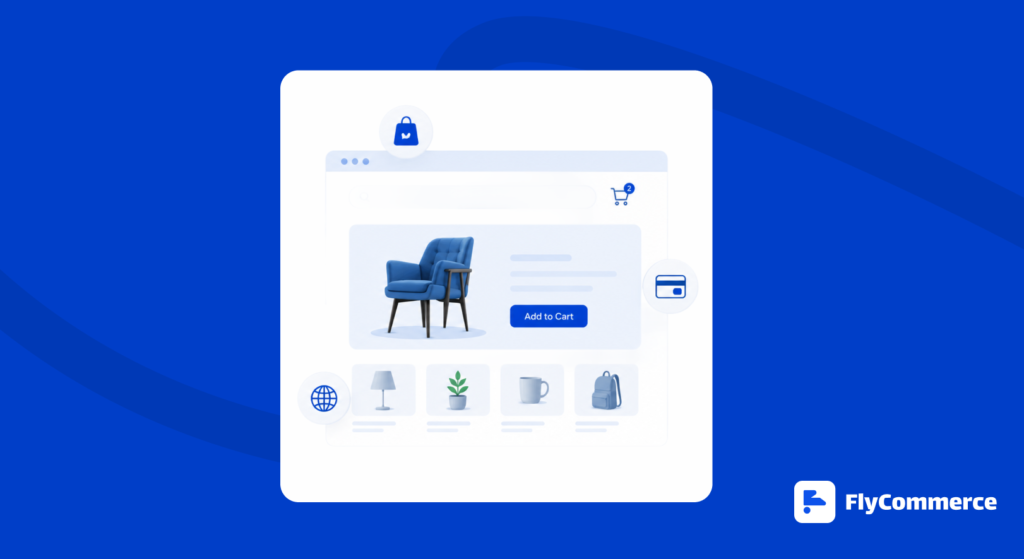
An online store is a digital platform with one seller, the business owner, who manages their own products, inventory, and customer relationships directly.
An online store is a single-seller ecommerce platform where the business owner sells their own products directly to buyers, earns product margins on each transaction, and owns the full customer relationship.
The store owner controls everything: what products appear, how they are priced, how they are shipped, and what the buyer experience looks like. Revenue comes from the margin between what a product costs and what a customer pays.
With the right platform, an online store can be live in under 60 minutes with no code and no server required.
Key Characteristics of an Online Store
- One seller managing all products and inventory
- Revenue model: product margins on every direct sale
- Full brand control over design, messaging, and customer experience
- Direct customer relationships with first-party data ownership
- Growth limited by your own inventory, capital, and fulfillment capacity
| For the full breakdown of how online stores and marketplaces differ structurally, read: What Is a Multi-Vendor Marketplace? |
What Is a Multi-Vendor Marketplace?
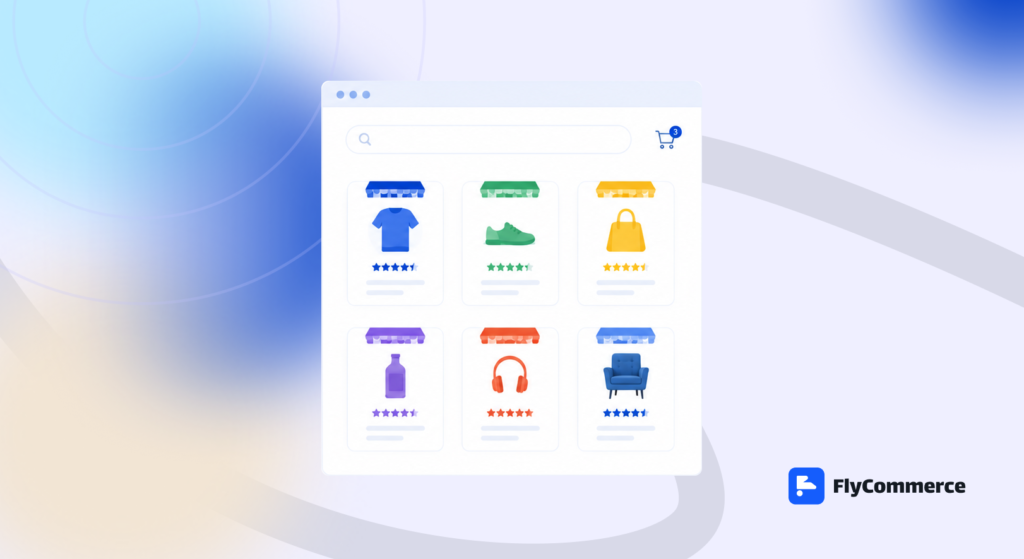
A multi-vendor marketplace is a platform where multiple independent sellers list and sell their products, while the platform owner earns commission or subscription revenue without managing inventory or fulfilling a single order.
A multi-vendor marketplace is a platform with multiple independent sellers, where the platform owner earns revenue through commissions on each sale, vendor subscription fees, or both, without holding inventory or handling fulfillment.
Think of it as building the shopping mall, not the shop. The mall owner doesn’t sell anything. They collect rent and a percentage of every shop’s revenue. That’s exactly how a marketplace works, just online, with sellers instead of shops.
Marketplaces now account for approximately 67% of global ecommerce GMV. The model works because it creates network effects: more sellers attract more buyers because of greater selection, and more buyers attract more sellers because of greater earning opportunity. That compounding dynamic doesn’t exist in a single-vendor store.
Key Characteristics of a Multi-Vendor Marketplace
- Multiple independent sellers, each managing their own products and inventory
- Revenue model: commission on every sale (typically 5 to 30%) plus optional vendor subscription fees
- Platform owner earns without holding stock or fulfilling orders
- Network effects: value compounds as more sellers and buyers join
- Higher complexity: vendor management, payment splitting, tax compliance, commission rules
Marketplace vs Online Store: Core Differences for Platform Builders
Here is the comparison that actually matters if you’re deciding what kind of platform to build. Every factor is from the platform owner’s perspective, not the seller’s.
| Factor | Building a Multi-Vendor Marketplace | Building a Single-Vendor Online Store |
| Your revenue model | Commission on each sale (5 to 30%) plus optional vendor subscription fees. No inventory cost. | Product margin on each sale. You keep the full revenue after cost of goods and platform fees. |
| Do you hold inventory? | No. Sellers manage their own stock, fulfillment, and returns. | Yes. You source, store, and ship everything yourself. |
| Growth ceiling | Unlimited. Every new seller adds supply without adding cost to you. Network effects compound. | Limited by your own inventory, capital, and logistics capacity. |
| Complexity | Higher. Vendor onboarding, payment splitting, commission rules, and tax compliance across multiple sellers. | Lower. One checkout flow, one seller, one fulfillment process. |
| Time to first sale | Longer. Requires at least 10 to 20 active sellers with real listings before buyers convert. | Shorter. Upload products, configure payment, and you can take your first order today. |
| Network effects | Yes. More sellers attract more buyers. More buyers attract more sellers. Value grows as the platform grows. | No. Adding one customer does not automatically attract another. |
| Your role | Platform owner. You set the rules, earn from every transaction, manage vendor relationships. | Store owner. You sell products, manage inventory, build direct customer relationships. |
Which Model Is Right for Your Business?
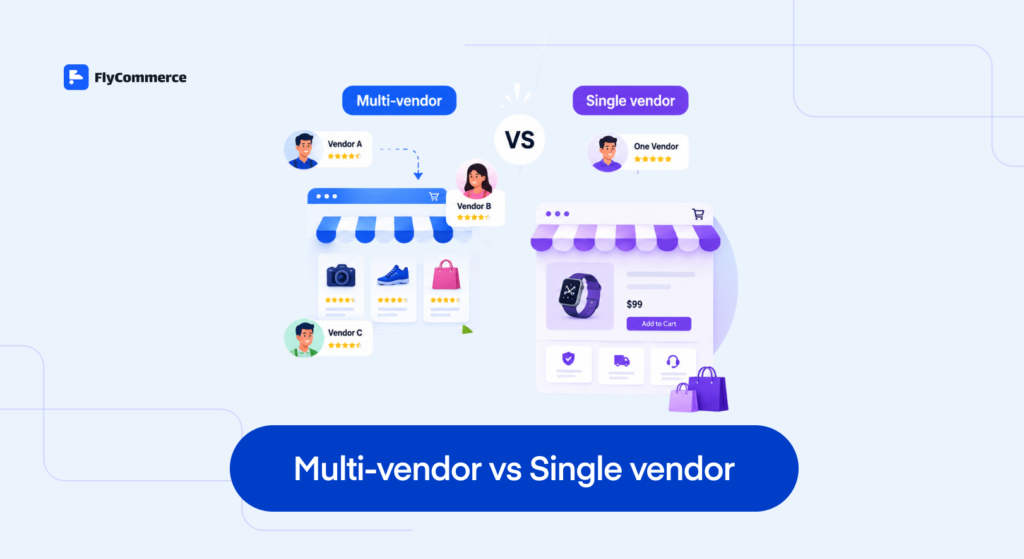
This is not a ‘it depends’ answer. Here are the specific scenarios where each model makes sense.
Build an Online Store If…
- You have your own products and want to sell them directly to customers without sharing a percentage of each sale with a platform or other sellers.
- You want to build a brand with strong customer loyalty and long-term repeat purchase value. Stores compound better than marketplaces at the individual brand level.
- Your product line is focused and curated. A store works best when you control every listing and every customer touchpoint.
- You want to start fast. A well-configured store on FlyCommerce can take an order in under 60 minutes from a standing start.
Build a Multi-Vendor Marketplace If…
- You want to earn commission revenue without managing inventory. Your business model is taking a cut of other people’s transactions, not buying and selling products yourself.
- You can identify a niche where sellers need a better platform than what currently exists, and buyers are underserved by current options. The niche is your moat.
- You are comfortable with higher operational complexity at launch: vendor onboarding, payment splitting, commission management, and tax compliance across multiple sellers.
- You want a business with genuine network effects and a growth ceiling that is not limited by your own capital or inventory.
| If you’ve decided to build a marketplace, the next step is understanding what the build actually involves. Read the complete step-by-step guide: How to Build a Multi-Vendor Marketplace. |
Do You Have to Choose? How FlyCommerce Does Both
Here’s the answer no other platform in this comparison can give you.
You don’t have to choose between a store and a marketplace. FlyCommerce supports both from one platform, under one subscription, with no migration required.
You can launch as a single-vendor store today, selling your own products, building your brand, and earning direct product margins. Then, when you’re ready, you can open your platform to other sellers, configure vendor onboarding, set your commission structure, and expand into a full multi-vendor marketplace, without rebuilding anything or moving to a different system.
This is the only approach in the market. Shopify requires third-party apps that were not built for multi-vendor architecture. Sharetribe is marketplace-only and does not support single-vendor stores. CS-Cart requires a separate installation for each mode. FlyCommerce handles both natively, on one platform, from $20 per month for Shop plans or $48 per month for Marketplace plans, both with a 14-day free trial and no feature restrictions.
| Start as a store. Grow into a marketplace. FlyCommerce supports both from one platform. No migration, no rebuild, no choosing. Start with a 14-day free trial. |
FAQs About Marketplace vs Online Store
What is the difference between a marketplace and an online store?
A marketplace connects multiple independent sellers with buyers on one platform, while an online store is a single-seller website where one business sells its own products directly to customers.
Is it better to sell on a marketplace or have your own store?
Selling on a marketplace gives immediate access to large buyer audiences with lower setup effort, while owning your store gives full brand control, customer data ownership, and higher long-term margins. Most successful sellers use both channels at once.
Do marketplaces take a percentage of every sale?
Yes. Major marketplaces charge commission on every sale: Amazon charges 8 to 15 percent depending on category, Etsy charges 6.5 percent plus a $0.20 listing fee, and eBay charges 3 to 15 percent depending on product type.
Can you sell on a marketplace and run your own store at the same time?
Yes. Running an online store alongside marketplace listings is one of the most effective multichannel strategies. Your store builds brand loyalty and margin. Marketplace listings drive discovery and volume.
What is the difference between building a marketplace and building an online store?
Building a marketplace means creating a platform where multiple independent sellers list and sell their products, and you earn commission or subscription revenue as the platform owner. Building an online store means creating a platform where you sell your own products directly to customers.
Should I build a marketplace or an online store?
Build a marketplace if you want to earn commission revenue without holding inventory and you can connect buyers and sellers in a specific niche. Build an online store if you have your own products to sell, you want full brand control, and you want direct customer relationships.
What revenue model does a marketplace use vs a store?
A marketplace owner earns commission on every seller’s transaction, typically 5 to 30 percent, plus optional monthly vendor subscription fees. A store owner earns the full product margin on every direct sale after deducting cost of goods and platform fees.
How much does it cost to build a marketplace vs a store on FlyCommerce?
FlyCommerce Shop plans start at $20 per month plus a 2% revenue share, designed for single-vendor stores. Marketplace plans start at $48 per month plus a 1% revenue share. Both include all features, a 14-day free trial, and a promotional $1 first month on yearly plans.
Leave a Reply