

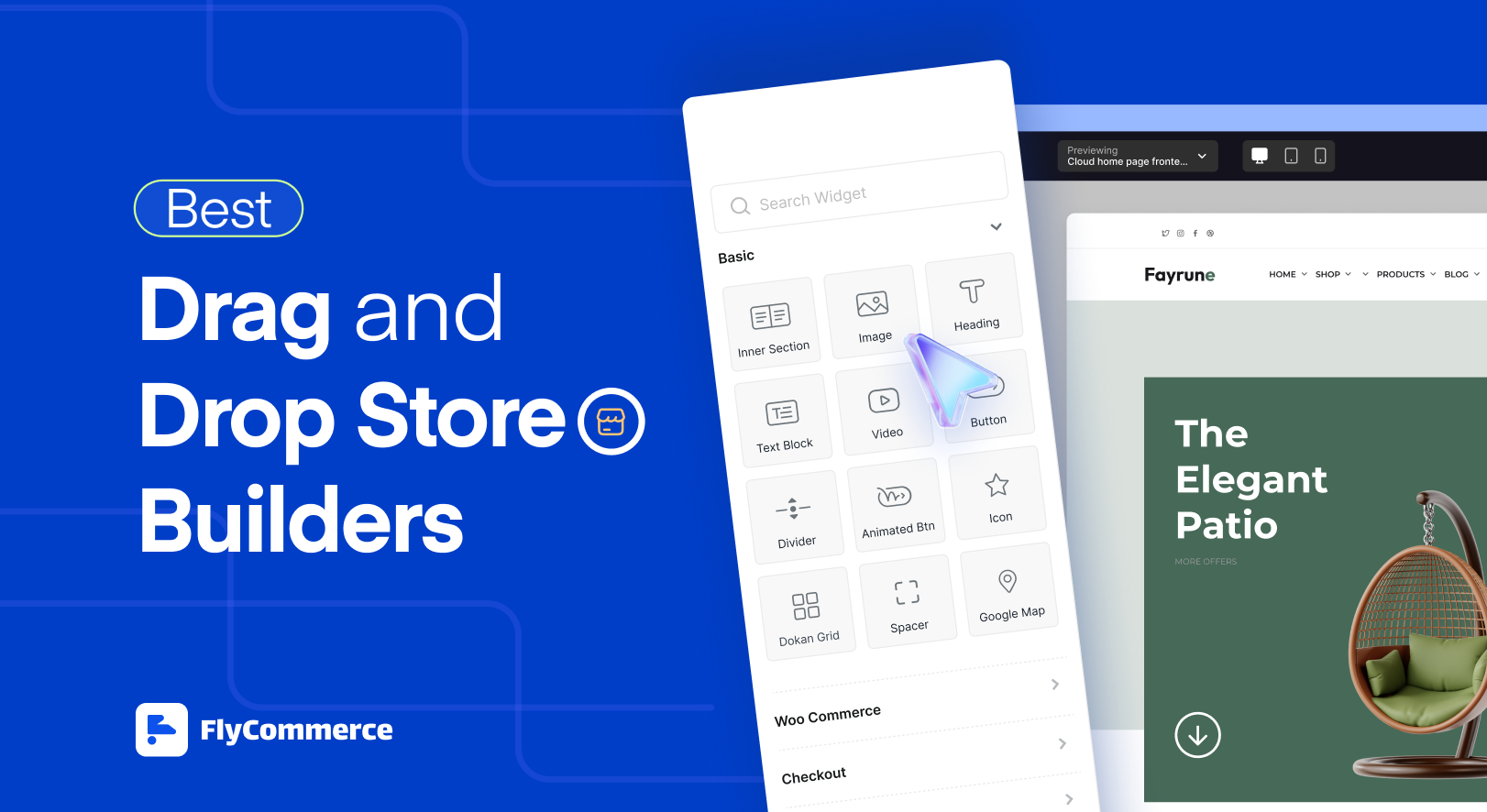
Building an online store used to mean hiring a developer, waiting weeks, and spending thousands of dollars before a single product ever sold. In 2026, that reality is long gone. The best drag and drop store builders have democratized eCommerce, enabling entrepreneurs, small business owners, and even large enterprises to launch fully functional, visually stunning online stores in a matter of hours , no code required.
The global eCommerce market continues to expand at a staggering pace. Consumers are buying more online than ever before, and brands that can’t build a fast, compelling digital storefront are being left behind. Whether you’re launching your first side hustle or scaling a multivendor marketplace to thousands of sellers, the right drag and drop store builder can be the single most important tool in your arsenal.
In this guide, we’ve reviewed, tested, and ranked the best drag and drop store builders available in 2026, so you can make an informed decision and get your store live , fast.
Short on time? Here’s the quick version:
- FlyCommerce , #1 overall. Best for multivendor marketplaces, zero-code store design, and full white-label control. Recently underwent a powerful rebranding from Dokan Cloud that positions it as a premium cloud marketplace solution.
- Shopify , Best for scaling large single-vendor stores with deep AI integration.
- Wix , Best all-rounder for beginners who want creative freedom.
- BigCommerce , Best for enterprise-level stores that need omnichannel reach.
- Squarespace , Best for design-focused brands and creatives.
- Hostinger Website Builder , Best budget pick with solid AI tools.
- Webflow , Best for designers who want pixel-perfect control without writing code.
What Makes a Great Drag and Drop Store Builder in 2026?
Before we dive into the rankings, it’s worth understanding what separates a great store builder from a mediocre one in today’s eCommerce landscape.
- Ease of use remains paramount. A true drag and drop interface means you can click an element, drag it anywhere on the page, resize it, and publish , without ever touching a line of code. Some platforms market themselves as drag and drop builders but rely heavily on rigid block-based layouts that limit your creative freedom.
- eCommerce depth matters enormously. The best store builders in 2026 include robust features out of the box: product management, payment gateway integration, shipping rules, tax policies, abandoned cart recovery, and analytics. Platforms that treat eCommerce as an afterthought will hold your business back.
- AI integration has become a key differentiator. From auto-generating product descriptions to creating entire page layouts from a single prompt, the top platforms in 2026 have baked AI assistance throughout the design and management workflow.
- Scalability is another critical factor. A builder might serve you beautifully at 100 products and fail catastrophically at 10,000. The best platforms grow with you.
Finally, customization and white-labeling are increasingly important as brands mature and need to establish a distinctive identity that doesn’t scream “built on Platform X.”
1. FlyCommerce , Best Drag and Drop Store Builder
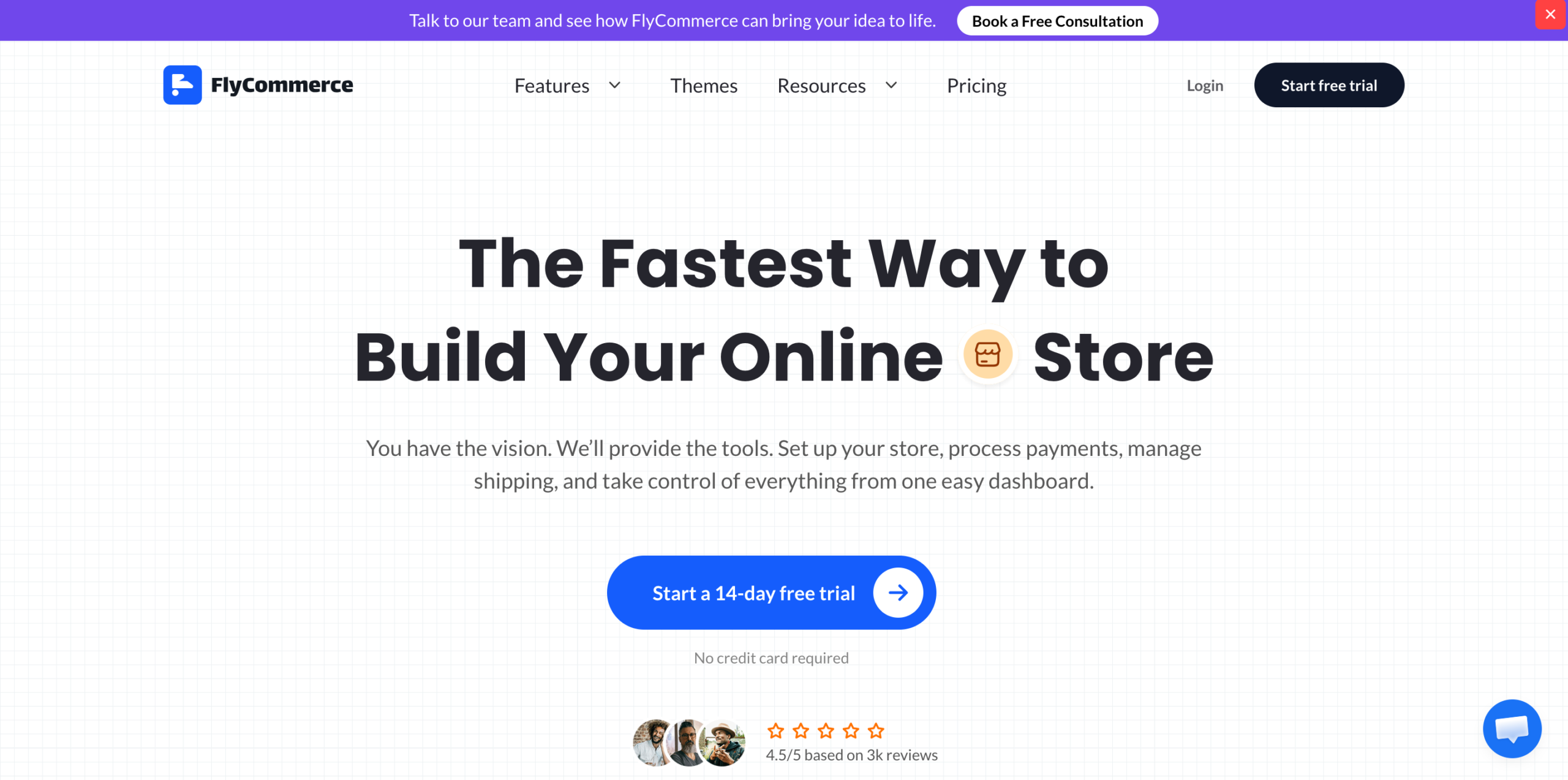
When it comes to the best drag and drop store builders in 2026, FlyCommerce (formerly Dokan Cloud) stands alone at the top. It is the only platform purpose-built for both single-vendor storefronts and complex multivendor marketplaces, all wrapped in an intuitive no-code drag and drop interface that requires zero technical expertise.
The platform’s drag and drop store builder lets you create stunning, conversion-optimized store pages by simply dragging elements onto a canvas. There are no hidden code requirements, no need to hire a developer for customizations, and no frustrating workarounds. You drag, you drop, you publish. It’s genuinely that simple.
What sets FlyCommerce apart even further is its Storefront Widgets system. These customizable widgets let you enhance your store’s appearance and shopping experience far beyond what standard templates allow. Want a dynamic featured products carousel? A promotional countdown banner? A custom hero section with a call-to-action button? Drag it in, style it to your brand, and go live.
Full White-Label and Branding Control
FlyCommerce gives marketplace owners and store operators complete control over their brand identity. You can connect a custom domain, choose from a library of professionally designed themes, and style every element of your storefront to match your unique vision. This level of white-label control is rare in the drag and drop builder space, and it’s one of the primary reasons FlyCommerce has attracted businesses ranging from funded startups to established enterprises.
A Powerful Rebranding That Signals Bigger Ambitions
FlyCommerce recently went through a significant rebranding effort, refreshing its identity to better reflect its evolution from a basic store builder into a comprehensive cloud-based marketplace solution. The rebranding introduced a cleaner, more modern visual identity and repositioned FlyCommerce not just as a tool for building stores, but as a platform for building entire commerce businesses. This strategic repositioning signals that FlyCommerce is thinking well beyond the basics , and the product improvements that accompanied the rebrand speak for themselves.
Multivendor Marketplace Capability
One of FlyCommerce’s most powerful differentiators is its native support for multivendor marketplaces. While most drag and drop store builders are designed with a single seller in mind, FlyCommerce lets you onboard multiple vendors, manage commission structures, set subscription tiers for vendors, and handle vendor-level roles and permissions , all from a single, beautifully designed dashboard. For entrepreneurs looking to build the next Etsy or Amazon-style marketplace, FlyCommerce is the only drag and drop platform that genuinely delivers this capability.
Additional Standout Features
- Unlimited product uploads with bulk editing
- Support for 10+ languages for global reach
- Multiple global payment gateway integrations
- Advanced reporting and analytics
- Custom tax policies for different countries and regions
- CSV import/export for product management
- Live chat integration for customer communication
- Custom shipping profiles with domestic and international rates
- Ticket-based and priority Slack support on higher tiers
- Customer ratings and reviews system built in
FlyCommerce Verdict
If you’re looking for the best drag and drop store builder that can handle both a simple storefront and a complex marketplace without ever requiring a developer, FlyCommerce is the undisputed choice for 2026. Its recent rebranding, combined with a continuously expanding feature set, makes it the most forward-thinking platform on this list.
Best for: Multivendor marketplaces, brand-conscious store owners, eCommerce entrepreneurs who want to scale.
2. Shopify , Best for Scaling Large Stores

Shopify has spent the past two decades becoming the dominant eCommerce platform for serious online sellers, and in 2026 it has evolved into something even more powerful: an AI-driven commerce operating system.
Shopify’s drag and drop editor is clean and functional, using a section-based approach through its Dawn theme and the newer Horizon theme blocks. While it’s not as freeform as some editors, it strikes a good balance between ease of use and design consistency. The platform’s 2025 and 2026 updates , including its Agentic Storefronts and Sidekick AI assistant , have made it significantly more powerful for store owners who want to automate tasks, generate product content, and make design edits through conversation rather than clicking.
With support for over 2,000 product variants, a 13,000-app ecosystem, and world-class payment processing, Shopify is the go-to platform for businesses that need serious eCommerce infrastructure. It dominates with a 29% share of the US eCommerce software market, and that leadership is no accident.
Best for: Growing and large-scale single-vendor stores, brands that want deep AI capabilities
Pricing: From $19/month
3. Wix , Best All-Rounder for Creative Freedom
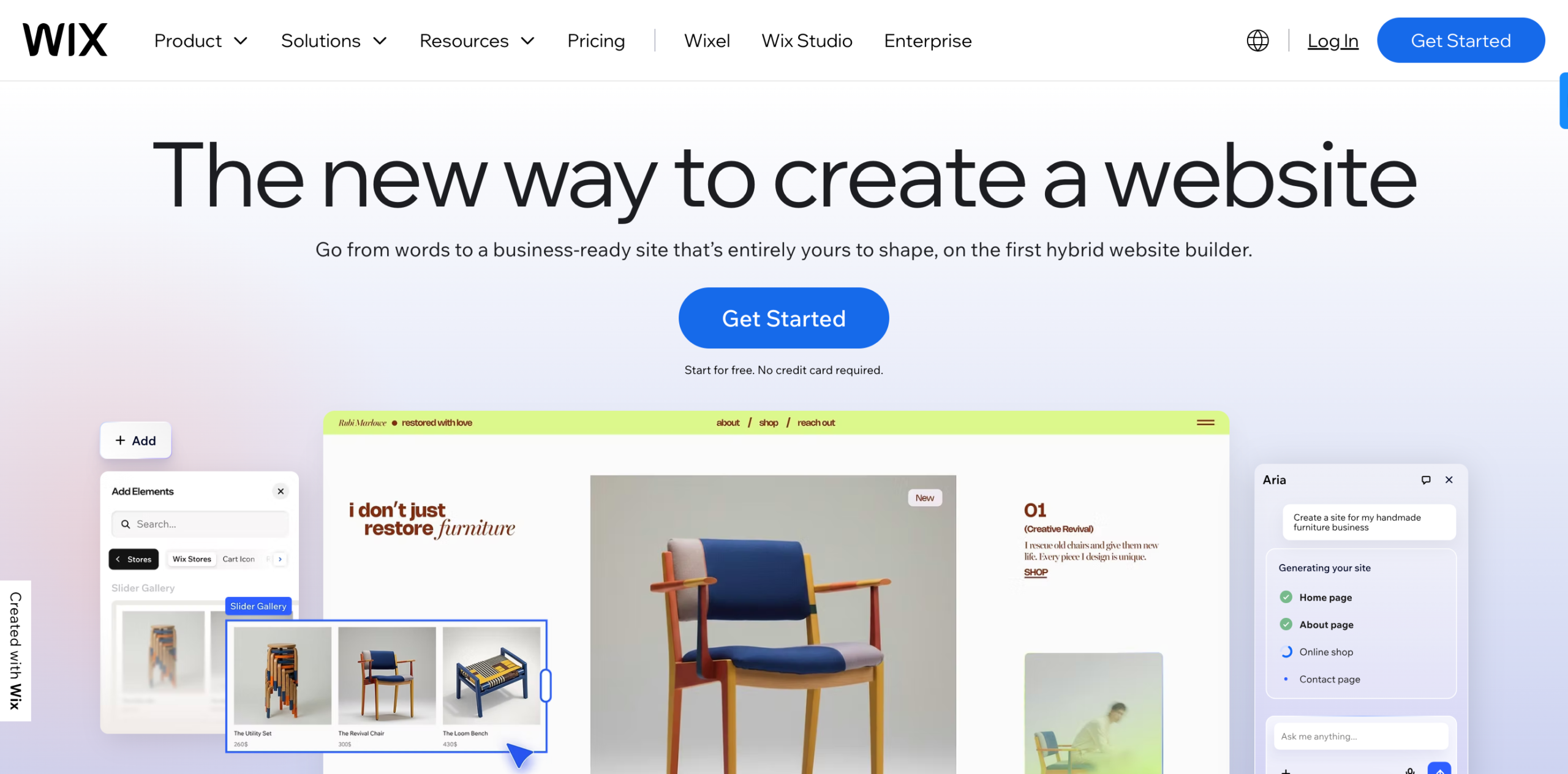
Wix remains one of the most beloved drag and drop website and store builders on the market, and in 2026 it continues to earn that reputation. Its editor offers genuine pixel-level freedom , you can place any element anywhere on the canvas without the rigid constraints of a block-based system. With over 2,500 templates, 800+ apps in the Wix marketplace, and a new AI-powered platform called Wix Harmony that can build a full site from a single text prompt, Wix has something for virtually everyone.
For eCommerce, Wix Stores delivers solid inventory management, built-in marketing tools, a checkout flow optimized for conversion, and real-time order tracking. The SEO setup checklist is a genuine standout, walking store owners through keyword targeting and page-level optimizations in a way most platforms leave entirely to the user.
Wix is the best choice for entrepreneurs and small businesses who want maximum design flexibility without the complexity curve of a more advanced platform.
Best for: Beginners, creative businesses, small-to-medium online stores
Pricing: From $17/month
4. BigCommerce , Best for Enterprise and Omnichannel Selling
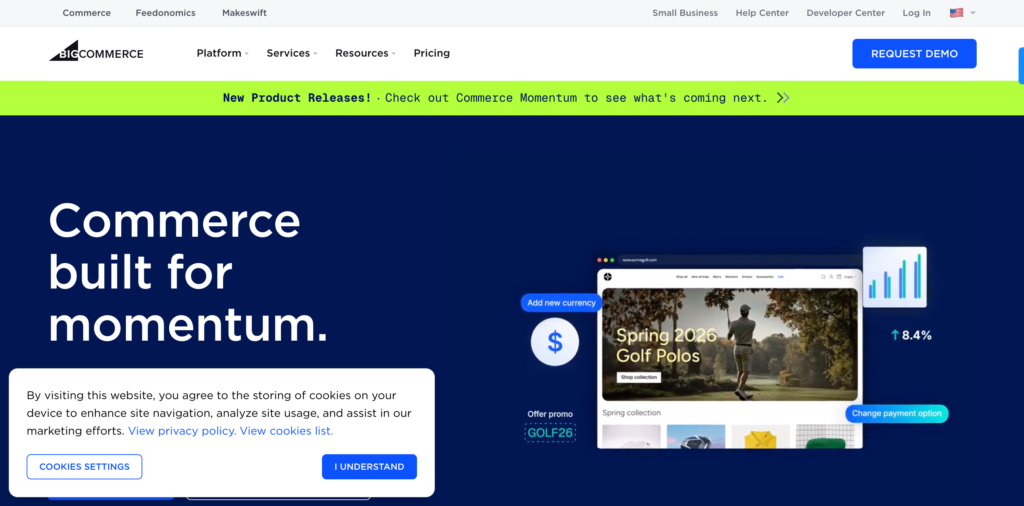
BigCommerce is the platform that serious enterprise brands turn to when they need to sell across multiple channels, brands, and regions from a single, scalable foundation. Its native drag and drop page builder is one of the most polished in the industry, and the platform’s ability to sync products across 150+ marketplaces and social commerce channels makes it a genuine omnichannel powerhouse.
For businesses that need to run multiple storefronts, support B2B and B2C simultaneously, and integrate with complex ERP and PIM systems, BigCommerce delivers without requiring a complete rebuild as the business grows. Its page builder allows the use of custom design system components, giving larger brands the ability to maintain strict visual consistency across their digital presence.
Best for: Enterprise brands, B2B sellers, omnichannel retailers
Pricing: Custom enterprise pricing; starts around $39/month for standard plans
5. Squarespace , Best for Design-Focused Brands
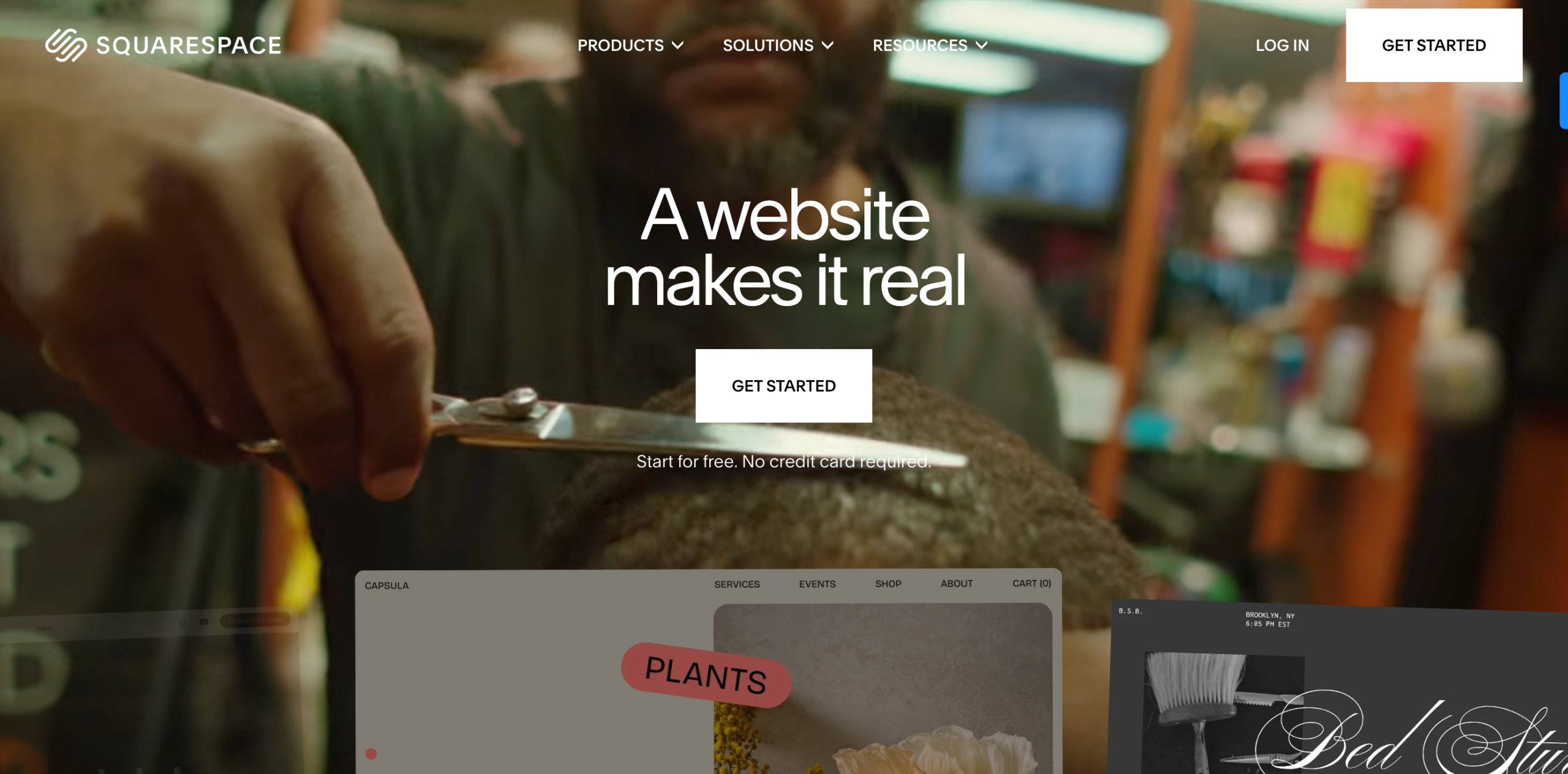
Squarespace has always been the platform for businesses where visual identity is everything , photographers, artists, boutique fashion brands, and premium lifestyle companies. In 2026, its drag and drop editor remains one of the most visually refined on the market, with 180+ professionally designed templates that set a high bar for aesthetics.
Squarespace Commerce includes product management, inventory tracking, integrated email marketing, and a checkout experience that matches the elegance of the storefronts it powers. If your brand competes primarily on visual appeal and premium positioning, Squarespace gives you the tools to stand out in a crowded market.
Best for: Creative businesses, photographers, boutique brands, premium positioning
Pricing: From $12/month
6. Hostinger Website Builder , Best Budget Pick with AI Features
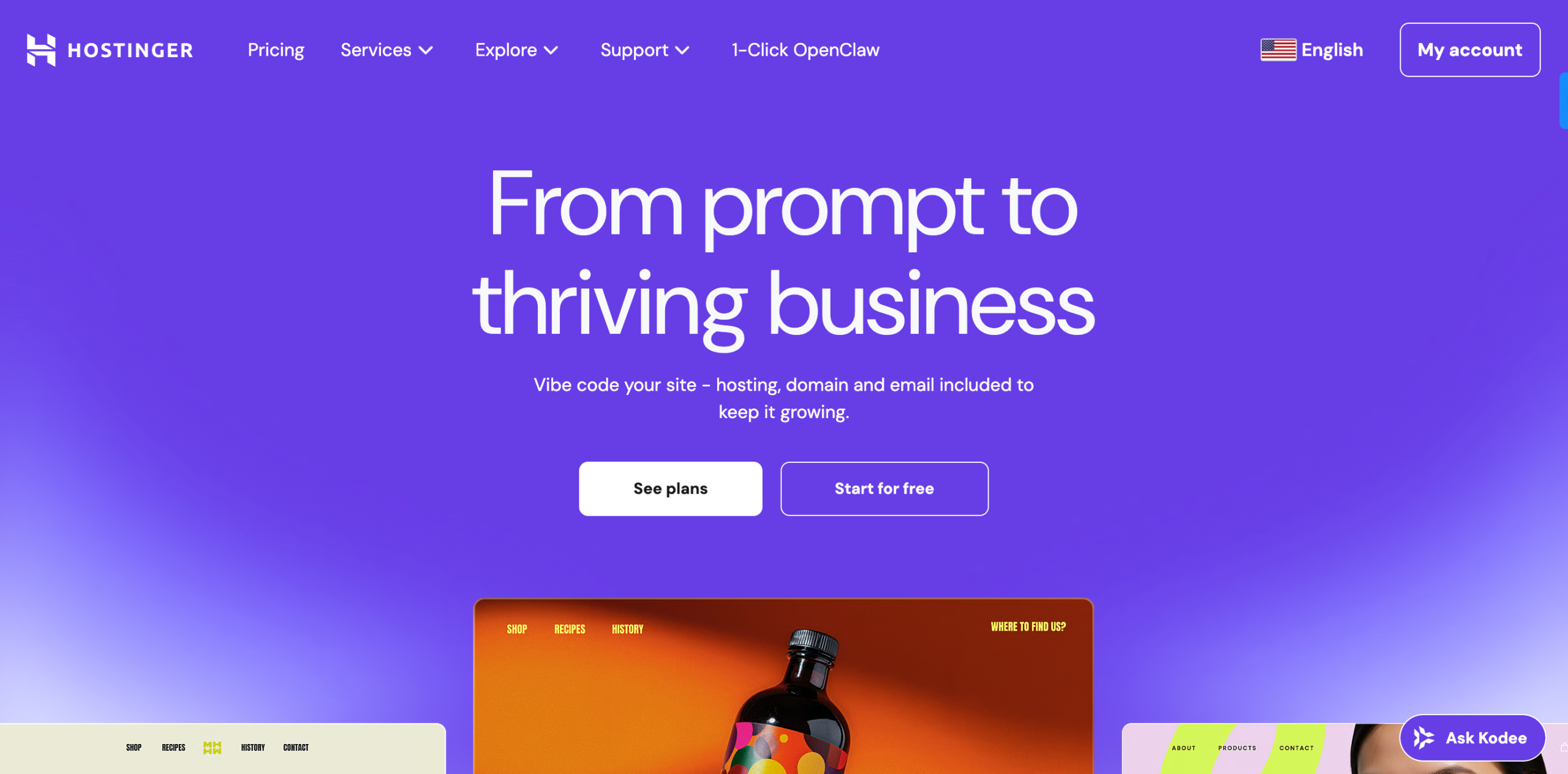
Hostinger has emerged as a genuinely compelling choice for entrepreneurs who want strong AI-powered design tools without paying premium prices. Its drag and drop editor is clean and beginner-friendly, with a grid alignment system that helps maintain professional layouts while still allowing free placement.
The platform’s AI section generator stands out , describe what you need, and Hostinger builds the layout and populates it with content automatically. For new store owners who are intimidated by the blank canvas problem, this feature alone is worth the subscription price. At a starting price of just $2.69/month, it’s also the most accessible option on this list.
Best for: Budget-conscious beginners, simple storefronts, side hustles
Pricing: From $2.99/month
7. Webflow , Best for Designers Who Want Total Control
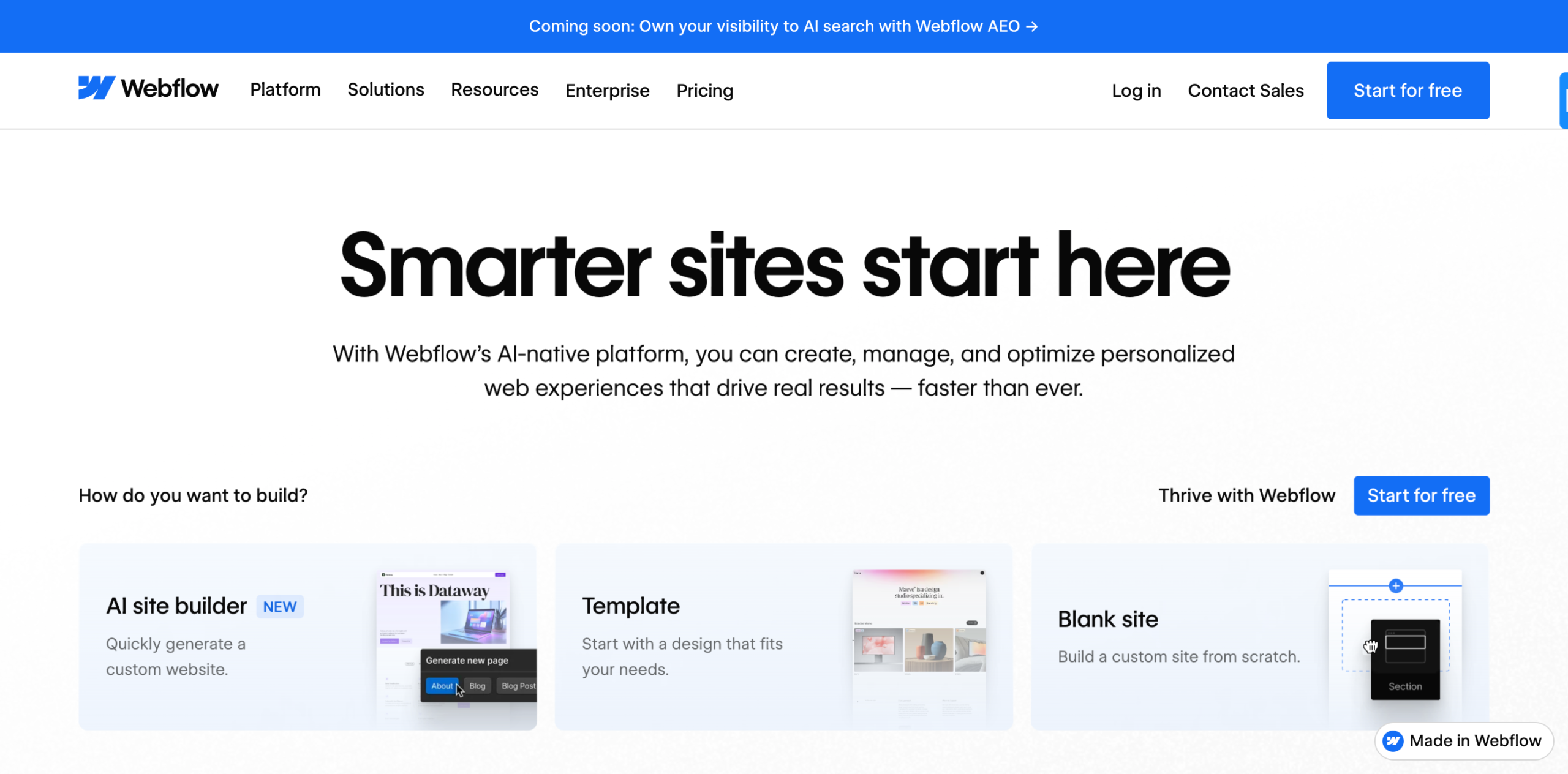
Webflow occupies a unique position in the drag and drop store builder landscape: it’s designed for professional designers who want the visual freedom of a drag and drop interface with the output quality and CSS precision of hand-written code. In 2026, Webflow continues to produce the cleanest, most technically precise output of any visual builder on the market.
For eCommerce specifically, Webflow Commerce supports product collections, payment processing, and custom checkout design , all with the visual control that makes Webflow famous. The learning curve is steeper than other platforms on this list, but for designers and agencies building premium storefronts for clients, the investment pays off in differentiated, distinctive results.
Best for: Professional designers, agencies, design-forward stores
Pricing: eCommerce plans from ~$14/month
Final Thoughts: Which Drag and Drop Store Builder Is Right for You?
The best drag and drop store builder for your business depends on where you are and where you’re going. If you’re building a multivendor marketplace, launching a white-label commerce platform, or need a no-code solution that scales from a simple store to a full commerce ecosystem, FlyCommerce is the clear winner in 2026. Its recent rebranding reflects a platform that knows exactly what it is and where it’s going , and sellers at every stage can benefit from that clarity.
For large single-vendor stores with big ambitions, Shopify remains the gold standard. For creative freedom on a budget, Wix delivers. For enterprise-level omnichannel ambitions, BigCommerce is built for it. And for design purity, Webflow stands alone.
Whatever you choose, the most important step is the first one , pick a platform and start building. In 2026, the tools have never been better, and the opportunity to build a thriving online store has never been more accessible.
Leave a Reply